Ruco Chan supported imperial prince Shaun Tam to be emperor. After the Qianlong Emperor dies, Shaun persuades Ruco's son (Matthew Ho) and confidant (Joel Chan) to turn on Ruco as he seeks to eliminate Ruco and his associates. But Ruco has already planned for this. He not only defuses Shaun's attack, but turns the tables and reveals imperial concubine Selena Lee's secret, causing Shaun to face enemies from both sides! Ruco's second wife Elaine Yiu and soulmate Natalie Tong act separately to turn Shaun's brother (Jonathan Cheung) against him. Meanwhile, the White Lotus sect is stirring up trouble, putting Shaun in a desperate situation. Except the Mandate of Heaven cannot be violated...
Roger Kwok has opened a school to educate others. His student Priscilla Wong is naturally gifted, but struggles in school, frequently mixing up vocabulary words. Roger is a righteous man, but seeing the corruption in society, he understands that education cannot change things. At this time, he meets the sharp-witted Kristal Tin. They quickly become a dynamic force as lawyers in court. The notorious KK Cheung and his son, Jerry Lamb, view the duo as their bitter rivals. Roger’s career change disappoints his good friend Evergreen Mak, whose father had been framed by a lawyer, Lee Sing Cheung, many years ago. Although Evergreen understands Roger’s intentions, he is suspicious of Kristal’s background. As he investigates, a 20-year old case is brought back to court and a cold-blooded lawyer killer suddenly appears. Rumours are flying everywhere and fear is swirling all around the city…
One day, Justice Bao comes across an old lady named Li who claimed to be the birth mother of the currently reigning Emperor Renzong. She explains that many years ago, she had been a palace maid and was impregnated with (the previous) Emperor Zhenzong’s child. However, the jealous Concubine Liu (now the Empress Dowager) bribed the eunuch Kwok and the midwife to substitute the baby for a wildcat. A maid, Kou Zhu, was ordered to drown the baby in the river, but she secretly bought the baby to the 8th imperial uncle’s mansion. Meanwhile, Emperor Zhenzong, believing that Li had delivered a bad omen, banished her to the cold palace. Concubine Liu ordered Kwok to set fire to the cold palace, but luckily, Li was able to escape. Later, Emperor Zhenzong, with no heirs of his own, adopted the 8th imperial uncle’s “son”, who, while unknown to him, was actually his real son. That prince would inherit the throne as Emperor Renzong.
After hearing this story, Justice Bao set up a hoax to trick Kwok into giving a confession. Justice Bao disguised himself as the god of death* and had the sister of Kou Zhu pretend to be the spirit of the maid. That night, they appeared before a drunken Kwok and threatened him with death if he did not atone for his hideous crime. An extremely superstitious person, Kwok immediately confessed to the conspiracy. *A common folklore was that Justice Bao went to the underworld at night to pass judgment on the dead.
With evidence in hand, Justice Bao took Li to see Emperor Renzong. The Emperor was initially in disbelief that Empress Dowager Liu could be so cunning and evil, but the 8th imperial uncle stepped forward to confirm the story. Finally, Emperor Renzong recognized his birth mother with the proper title of Empress Dowager. Kwok was beheaded with the tiger-headed guillotine and Liu was given a white ribbon to commit suicide.
The Truth
Emperor Renzong was indeed the son of Li, a maid of Empress Dowager Liu. Yet, he regarded Liu as his mother for many years. How did this come to be?
It turns out everything was actually a conspiracy by his own father, Emperor Zhenzong. Liu was Zhenzong’s favourite concubine and he wanted to make her empress. But she hailed form a poor background and was, therefore, deemed unsuitable to be empress. Meanwhile, there was another problem. Zhenzong had no heirs as his five sons all died young. Liu introduced her maid Li to the Emperor and sure enough, Li soon produced a royal heir. But Zhenzong took her son and announced to the world that Liu was the one who bore the prince. As such, she merited the title of Empress. On the other hand, Li was named as a consort, and she would later give birth to a princess (though the princess did not survive). When Consort Li died, Empress Liu arranged to have her buried with first-class honours. The Empress also sought out her brother and gave him a government position.
Upon Zhenzong’s death, Liu became the Empress Dowager and regent to Renzong. She proved to be a very able regent, taking care of national matters and defending against ambitious ministers. She is described as “Having the wit of Lu and Wu*, but not their evilness.” She and Renzong shared a close relationship. After 11 years as regent, Empress Dowager Liu died from illness. Finally some ministers told Renzong the truth about his mother. They even suggested that Li had been poisoned by the Empress Dowager. Renzong was in shock. He ordered for Li’s coffin to be exhumed. When the coffin was open, he discovered that Li was dressed in robes fit for an empress and her body was well-preserved with mercury. Renzong dispelled all rumours that Empress Dowager Liu plotted against his birth mother. He accorded high titles to both women. *Lu Zhi and Wu Zetian are notorious empress dowagers for their ruthless ways.
Another point to note is that Justice Bao never could have been involved in this case, as he did not start his career until after Empress Dowager Liu’s death.
In Always and Ever, the son of Emperor Renzong (KK Cheung) is switched for a wildcat, but in the traditional story, it is Renzong himself that gets switched.
Executing Chen Shimei (鍘美案)
Chen Shimei (陳世美) was a scholar living with his wife Qin Xianglian (秦香蓮) and two children. When it was time for the imperial examination, he had to leave his family behind and travel to the capital city to take the test. His years of studying paid off as Chen placed first in the examinations. As per custom, he was invited for a tour of the palace. It had been rumoured that the Empress Dowager wanted to find a husband for the princess, so when the Empress Dowager asked Chen about his family, he lied and said “My parents have died and I am unmarried.” The Empress Dowager was delighted and promptly arranged for Chen to marry the princess.
Meanwhile, Qin waited at home for three years without any news of her husband. Finally, she decided to go search for him. Arriving in the capital with her children, she quickly learned that Chen had become the new prince consort. She went to his mansion and requested to meet with him, but was rebuffed three times. Qin eventually managed to sneak into the house. When she saw Chen, she begged him to at least help his own children. Chen refused to even acknowledge that he knew them and kicked them out.
Chen became worried that his lies would be exposed, so he sent his servant to kill Qin and the children. The servant found them in an abandoned temple, but when he learned of the truth, he could not bear to kill them. Instead, he told Qin about Chen's orders to kill them and then committed suicide.
Angered by Chen’s heartlessness, Qin decided to expose his misdeeds. She went to Justice Bao, who was the only official who would agree to hear the case. Justice Bao asked Chen to appear in court to answer to the charges. Chen, confident that he would walk free because of his royal status, turned around and accused Qin of lying. But Qin was able to produce concrete evidence of Chen's crimes. Justice Bao sentenced him to death according to the law. When the Empress Dowager and princess heard of this, they rushed to the courtroom and tried everything they could to stop the execution. However, Justice Bao was unwavering and ordered the execution of the Prince Consort using the dragon-headed guillotine.
The Truth
There was a real man named Chen Shimei recorded in the history books, but he lived during the Qing Dynasty (several centuries after Justice Bao's time). The real Chen Shimei was a high-ranking government official. His two friends asked him to help them obtain government positions, but were refused, so they wrote a play about a heartless man with his namesake. To their surprise, the audience loved the story! The play originally ended with Chen Shimei sending assassins after Qin Xianglian, but the audience cried for more. Frantically, the playwrights scrambled to come up with an idea. That's when they saw that the actor playing Justice Bao from the last show was still in costume backstage. They hurriedly pushed him onto the stage to finish the show. The actor exclaimed "Are you crazy? Justice Bao is from the Song Dynasty and Chen Shimei is from the Qing Dynasty. How can they appear together?" The playwrights replied "Who cares? Only Justice Bao would dare to execute the Prince Consort!"
Nowadays, the term "Chen Shimei" is used to refer to a heartless, unfaithful man.
Bao Zheng(包拯) was a government official during the Song Dynasty. He was well-known for his honesty and impartiality. He treated everyone who came before his court equally, regardless of their rank or connections. During his career, he impeached many corrupt officials, including his own uncle and that of an imperial concubine. He also implemented changes to make the court system more accessible to commoners. Though he was appointed to high offices, Bao Zheng lived a modest life. He observed filial principles closely, even delaying the start of his career to take care of his elderly parents.
Because of his honourable character, Bao Zheng was adored by the people. They gave him the nickname of “Clear Sky Bao” (包青天), which is to mean that the truth will come out as clear as the sky in any case investigated by him. His name is now synonymous with justice and integrity, the hallmarks of an ideal official.
Justice Bao is often portrayed in popular culture with a black face and crescent birthmark. In the legends, he has three sets of guillotines, each adorned with the head of a different animal.
- The dog-headed one was used on commoners
- The tiger-headed one was used on government officials
- The dragon-headed one was used on noblemen and royalty
Justice Bao had the authority to execute anyone without requiring the approval of the emperor. He also possesses a golden rod and sword, bestowed by the previous emperor, symbolizing his power to speak out against the emperor’s wrongdoings. Related: Famous Justice Bao Cases
Emperor Renzong (宋仁宗) was the 4th emperor of the Song Dynasty. Succeeding his father at age 13, he stayed on the throne for 42 years – the longest of all Song emperors. His reign is generally regarded to be a prosperous era, but also the beginning of the Song Dynasty’s weakening.
Much of his reign was marked by peace, as Renzong agreed to peace treaties with neighboring states. Of course, peace came at a price. Because the Song court was required to pay large tributes to the other states, citizens were burdened with heavy taxes. Also, the government still had to pay the idle army, which accounted for 70% of tax revenues. To his credit, Renzong did not add to the state’s burden with lavish expenditures. For instance, he was once served crab for dinner, but upon hearing that a single crab cost $1000, he could not bring himself to eat it.
The Song dynasty was known to have tolerant policies towards scholars. This was particularly true under Renzong because of his personal interest in Confucianism. He set the precedent of combining the “Four Books” for learning. He also ordered that the imperial library be reorganized and catalogued. This open policy towards scholars allowed for literary and scientific development. Six of the Eight Great Poets of Tang and Song lived during this time. Many important inventions first appeared during Renzong’s reign, such as government-issued paper currency, formula for gunpowder, movable type and the compass.
Emperor Renzong died without an heir (his three sons all died young) and was succeeded by his cousin’s son. Emperor Renzong had been widely respected for his benevolent rule. Upon hearing news of his death, Song citizens wept openly in mourning. Even the Liao ruler paid tribute to him and built a memorial for Renzong. Years later, when the Jin invaded Song, they raided the tombs of the Song emperors, but left Renzong’s grave untouched because of their respect for him. Later generations will often learn about Renzong through the stories of Justice Bao. He is the prince referenced to in the case of “Switching Wildcat for Crown Prince” (狸貓換太子).
Princess Hing-Sau (慶壽公主) was the tenth daughter of Emperor Renzong. She was one of the longest-living princesses in Chinese history, living through seven emperors before her death at the age of 86. During the Jingkang Incident (靖康之難), the Jin invaded the Song capital and captured many members of the imperial family. However, the princess was able to evade capture because the Jin thought that a princess from so many generations ago* would surely be dead. With the establishment of the Southern Song Dynasty, Princess Hing-Sau moved south along with the royal court, where she spent the rest of her life.
*The Jingkang Incident occurred during the reign of Emperor Qinzong, who was the fifth emperor to take the throne after the princess’s father, Renzong.
Fictional Characters
Zhan Zhao (展昭) serves as bodyguard to Bao Zheng. He is one of the heroes in the novel The Seven Heroes and Five Gallants (七俠五義).As a youth, he roamed the country and helped people in need. He rescued Bao Zheng four times. The grateful Justice Bao recommended Zhan Zhao to the emperor, who granted him the position of a fourth-rank imperial guard and the nickname “Royal Cat”.
Gongsun Ce (公孫策) is Bao Zheng's assistant. He is highly intelligent and knowledgable in many subject areas. Despite this, he did not want to be a government official as he despised their corruption. When he met the righteous Bao Zheng, he finally decided to take up the post of a sixth-ranking law clerk so that he could help Justice Bao solve cases. He often disguised himself as a medicine man or fortune teller to make investigations. He is the designer of Justice Bao's guillotines. Related: Historical Context: Sung Wong Toi
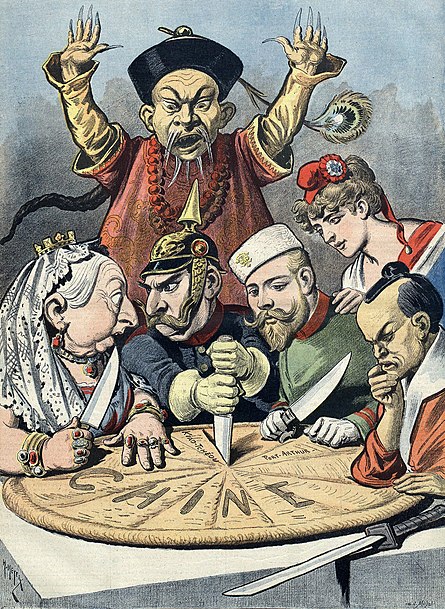
The “Unequal Treaties” (不平等條約) refers to a series of one-sided treaties signed between China and other countries during the late-Qing Dynasty. Western empires, such as the British, French and Russians, used their military might to force enormous concessions from the weak Qing court. In effect, these treaties opened up China to foreign trade and infringed on China's sovereignty.
The 1st of the unequal treaties was the Treaty of Nanking (南京條約), signed with the British Empire to end the First Opium War. The most famous repercussion of this treaty was the cession of Hong Kong to Britain. China had to open five trading ports, where British citizens were free to trade and reside while being exempted from Chinese law. The Qing court was also forced to pay a sum of 21 million dollars to cover for Britain’s losses during the war. A supplement treaty was signed afterwards to clarify and add to the terms of the Treaty of Nanking.
Following the Treaty of Nanking, the United States and France both forced China to sign separate treaties giving them similar rights as the British. In addition, the Americans and French secured the right to build churches and cemeteries. As a result of the French treaty, the Qing court had to rescind a previous imperial edict that had banned Christianity in China.
The treaty that has been mentioned in The Confidant is the Treaty of Tianjin (天津條約), signed with Britain, France, Russia and USA during the Second Opium War. Among the terms, China was to open ten additional ports to foreign trade. Foreigners were granted permission to travel into the interior regions of China and navigate ships on the Yangtze River. Each of the countries was also allowed to establish diplomatic offices in the capital city Beijing. The Treaty of Tianjin was supposed to end the war, but the war resumed when the Chinese tried to block the British and French armies from escorting their envoys to Beijing.
The British-French alliance invaded Beijing, causing the Xianfeng Emperor to flee the capital and leaving Prince Gong in charge of negotiations. Prince Gong reached an agreement with the British, French and Russians, known as the Convention of Peking (北京條約). Its first condition was for China to ratify the Treaty of Tianjin. Additional monetary compensation was given to Britain and France and one extra trading port was opened (besides the ten ports named in the Treaty of Tianjin). China ceded the Kowloon Peninsula to the British as well. In terms of religious freedom, all Christians (whether foreign or Chinese) were free to conduct missionary activities and enjoy the protection of the Qing court. The Convention of Peking ended the Second Opium War.
As the Qing Dynasty continued to decline and eventually was abolished, China was forced to sign more unequal treaties (see list). With World War I, China was at war against Germany and Austria-Hungary, terminating any treaties signed with those two countries. The treaties with Japan and Italy were similarly terminated with World War II. Later, Britain, France, Soviet Union and the United States voluntarily gave up their rights under the treaties. With the handover of Hong Kong and Macau in 1997 and 1999, respectively, the majority of the consequences arising from the unequal treaties had ended.
The Tongzhi Emperor (同治帝) was the son of Cixi and the only surviving prince of the Xianfeng Emperor. He ascended to the throne at age 5. As a young emperor, the authority was placed in the hands of the Empress Dowagers Cixi and Ci’an, and his uncle Prince Gong. Due to his lack of power, he became uninterested in politics and neglected his education. He allegedly sneaked out of the Forbidden City to visit brothels. He gained the right to rule on his own at age 18, yet he did not know how to handle governmental affairs and caused trouble. In one instance, he issued an edict to rebuild Yuan Ming Yuan, without considering the lack of state funds. When Prince Gong and other ministers disagreed with his plan, he demoted them. His actions were so appalling that the Empress Dowagers appeared in court and forced the Emperor to withdraw his edict. Tongzhi died at the age of 19 without an heir. Official records show that he died of smallpox, but some believe he died from a sexually transmitted disease, contacted while engaging with prostitutes.
The Jiashun Empress (嘉順皇后), also known as Lady Alute, was the Empress Consort of Tongzhi. She was said to be extremely intelligent, virtuous and beautiful. She was a relative of Ci’an and heavily favoured by Tongzhi, which gained her the wrath of Cixi. Moreover, her grandfather was one of the disposed regents from the Xinyou Coup. Cixi was unhappy that her son spent all his time with Lady Alute, while neglecting the concubines that were favoured by Cixi. She tried to separate the young couple. This action was supposedly what prompted him to seek entertainment from prostitutes. Lady Alute died shortly after Tongzhi. Her death was officially recorded as due to illness, however, speculations are that she was either forced to commit suicide or poisoned by Cixi. It is believed that she was pregnant at the time of Tongzhi’s death and Cixi was worried that her power would be threatened if the baby turned out to be a boy.
Conflict between Lady Alute and Cixi:
Two alleged incidents deepened Cixi’s hatred towards Lady Alute. In the first, Cixi ordered that Lady Alute be slapped on the face by eunuchs over a minor offence. This was considered an extremely degrading punishment to females such that even servants were rarely subjected to it. Lady Alute pleaded with Cixi to spare her the humiliation because she had entered the palace through the Great Qing Gate (大清門) after all. The Great Qing Gate was the palace’s main entrance and used for ceremonial purposes only. During the wedding of the Emperor and Empress, the Empress would be carried into the palace through the Great Qing Gate, which was the case for Lady Alute. But Cixi had only been a concubine to her husband, the Xianfeng Emperor, thus she had only been eligible to enter the palace through a side entrance. Cixi felt that Lady Alute’s comment was meant as an insult and deeply resented her for it. In the second incident, Lady Alute was at the bedside of her ailing husband, Tongzhi, complaining to him about Cixi’s tyranny and spoke of her desire to see him recover so that they can rule the country together. Cixi overheard this and rushed into the room, grabbing her by the hair and hitting her. After this, Cixi vowed to get rid of Lady Alute.
Prince Gong (恭親王), personal name Yixin (奕訢), was the sixth son of the Daoguang Emperor. During his brother Xianfeng’s reign, he forged an imperial edict to grant his birth mother (step-mother to Xianfeng) the title of Empress Dowager. Xianfeng did not rescind the edict, but thereafter, Prince Gong was only given minor roles within the government. This lasted until the Second Opium War. While Xianfeng fled the capital, Prince Gong was given full authority to negotiate a treaty with the foreigners, culminating in the Convention of Peking. At the onset of his nephew Tongzhi’s reign, he aided the Empress Dowagers to gain power in the Xinyou Coup. To reward his help, he was named Prince-Regent and admitted into the Grand Council (the privy council of the Qing court). He pushed for many reform policies, such as establishing a foreign affairs ministry, creation of a school for learning Western-knowledge, use of foreign technologies and the opening of trade ports. His enthusiasm for foreigners earned him the nickname “鬼子六” (Devil Number Six). He irked Cixi in many ways, including his opposition to her plans for rebuilding the Summer Palace and his role in death of An Dehai. Eventually Cixi felt that his increasing political influence was a threat to her power and dismissed him from office by blaming him for the loss in the Sino-French War.
Li Lianying (李連英) was a eunuch that was heavily favoured by Empress Dowager Cixi. Reportedly, he gained her favour because he was very good at flattery and at braiding her hair. Her favouritism towards him is apparent as she made him a second-rank Head Eunuch despite a rule that limited eunuchs to only the fourth rank. Li Lianying has typically been portrayed in a negative light, as a self-interested and greedy eunuch. However, historic records describe him as attentive, cautious and sympathetic. Often, he would try to convince Cixi to spare servants from punishment. Nonetheless, it is true that he accepted briberies from other officials. With his proximity to the Empress Dowager, he had tremendous influence over who was granted an audience with the Cixi, allowing him to accumulate a handsome fortune. After Cixi died, he left the palace and was murdered just before the Revolution of 1911. His murder increased speculations that he had been involved in the poisoning of the Guangxu Emperor.
An Dehai(安德海) preceded Li Lianying as Head Eunuch. He had been successful in winning the affections of both the Xianfeng Emperor and Empress Dowager Cixi. He was a clever sweet-talker and very attentive to his master’s needs. For example, he especially built a theatre and trained a group of performers so that Cixi could watch opera at any time she liked. During the Xinyou Coup, he acted as a messenger between the Empress Dowagers and Prince Gong. For his role, he was promoted to the position of Head Eunuch. Relying on his close relationship with Cixi, An Dehai showed little respect to everyone else, including Tongzhi and Prince Gong. He often gossiped to Cixi about the young Emperor, causing their mother-son relationship to be strained. He also began to interfere in political matters even though Qing traditions strictly prohibited eunuchs from taking part in politics. Seeing Prince Gong as an obstacle, he persuaded Cixi to demote the Prince. His actions displeased many in the royal court, yet they could not do anything since he was Cixi’s favourite. Although he was a eunuch, An Dehai married a 19-year-old opera singer. As his wedding gift, Cixi granted him 1000 pieces of silver and 100 bundles of fine satin. His marriage fuelled rumours that he was a fake eunuch that was kept by Cixi to satisfy her sexual desires.
His death: (Possible Spoilers!)
An Dehai was sent by Cixi to Nanking to purchase fabric for the Emperor’s dragon robes. While travelling, An Dehai made it known that he was conducting business for the Empress Dowager. He made a grand scene by inviting women to play music on his boat and extorting local officials for briberies. On his birthday, he demanded the local people bring him gifts. This alerted the local governor, who arrested him on the basis that eunuchs were not allowed to travel outside the capital city. The governor promptly executed An Dehai on the orders of Ci’an (possibly masterminded by Tongzhi and Prince Gong). An Dehai’s corpse was hung on the city walls for three days, which should have dispelled rumours that he was not a real eunuch.
In The Confidant, Li Lianying (Wayne Lai) and An Dehai (Raymond Cho) are portrayed as good friends who had entered the palace together as young kids. In reality, An Dehai entered the palace before Li Lianying and was able to gain Cixi’s favour after the Xinyou Coup in 1861. By the time Li Lianying was sent to work at Cixi’s residence in 1864, An Dehai had already been made Head Eunuch. Due to their difference in status, it is unlikely that they became good friends.
Prince Chun is the seventh son of the Daoguang Emperor and married to Cixi’s younger sister. He lent military support to the Empress Dowagers in the Xinyou Coup and was responsible for the capture of Sushun. As a result, he was given increasingly prestigious roles and honours and became a close ally of Cixi. When Tongzhi died without an heir, his son was installed as the Guangxu Emperor. Fearing that Cixi may eventually perceive him as a threat (since he was the father of the Emperor), he resigned from all his posts. However, he later accepted an invitation to be in charge of his son’s education. Seeing his brother Prince Gong’s fall from grace and Ci’an’s sudden death (possibly at the hands of Cixi), Prince Chun was eager to please Cixi. When he was appointed to oversee the establishment of the navy, he diverted military funds towards the rebuilding of the Summer Palace for her. With the completion of that project, he died peacefully and his title of “Prince Chun” was passed onto his son. His son, the 2nd Prince Chun, would become the father and regent of the last Qing Emperor, Puyi.
Other true historical characters:
Aimee Chan as 和碩公主 – She is the 9th daughter of the Daoguang Emperor, sharing the same mother as Prince Chun. She is married to a man named Duk Fei (德徽), but he dies after 1+ years of marriage. (We have surely not seen the last of Aimee. She will likely return to the palace after her husband’s death.)
Selena Li as 婉太繽 – She is the concubine of the Xianfeng Emperor, however, she died too early in The Confidant. In reality, she died in the 20th year of the Guangxu era, which takes place after Tongzhi’s (Oscar Leung) reign.
Cilia Kung as 慧妃 – She is the concubine of the Tongzhi Emperor. She was Cixi’s choice to be Empress, but Tongzhi picked Lady Alute (Natalie Tong) instead. As Cixi’s favourite, she was quickly made into an Imperial Noble Consort (皇貴妃, ranking second only to the Empress) ahead of the other concubines.
Tsui Wing as 勝保 – He was a military general who sided with Cixi in the Xinyou Coup. However, his long string of military losses and arrogant attitude led to other ministers complaining about him. He was convicted on charges such as falsifying military defeats as victories and fabricating military achievements, and forced to commit suicide.
Chung King-fai as 劉多生 – He was the eunuch responsible for the imperial seal during the Xianfeng era. He would later move to the Imperial Household Deprtmant (內務府) to be the assistant to Li Lianying. Once, when he was making funeral arrangements for Cixi’s mother, he met a Taoist priest. From then on, he became very devoted to Taoism, even using his personal wealth to build and repair temples.
Peter Pang as 桂祥 – He is Cixi’s younger brother and granted the title of 承恩公. However, he was not given this title until his daughter (the future Empress Dowager Longyu) married the Guangxu Emperor, thus it is inaccurate to refer to him by this title in The Confidant.
Mandy Lam as 婉貞 – She is Cixi’s younger sister and Prince Chun’s wife. She is the mother of the future Guangxu Emperor.
With the defeat of the Qing army
during Second Opium War, the Xianfeng Emperor and the Imperial family were
forced to flee to the Mountain Resort in Rehe (熱河, now known as Chengde). When he learned of the
Burning of Yuan Ming Yuan, his health quickly deteriorated and not long after, the
Emperor died at the Mountain Resort.
On his deathbed, Xianfeng
appointed eight regents for his young successor, including Sushun (肅順). As a balance to their power, Xianfeng also gave Imperial
seals to his Empress Ci’an and the boy emperor’s mother, Cixi. The two seals
would be required to issue any Imperial edicts.
A power
struggle ensued between the two sides. The regents insisted that the two Empress
Dowagers merely rubberstamp any edicts issued by them. The Empress Dowagers
refused and demanded to be able to “Listen behind curtains” (垂簾聽政). The regents vigorously opposed this policy,
stating a long-standing Qing tradition that barred
women from interfering with political matters.
To secure
her power, Cixi convinced Ci’an that they needed to oust the eight regents.
They secretly allied with Prince Gong, the brother of Xianfeng. Prince Gong had
surprisingly been left out as a regent despite the fact that he was the closest
relative of Xianfeng. At the time of Xianfeng’s death, Prince Gong was in
Beijing, so he used the excuse of mourning for his brother to travel to Rehe.
There he met with the Empress Dowagers to discuss their plans to overthrow the
eight regents. They agreed that they had to travel back to Beijing since Rehe
was under the political control of the regents.
After that,
Prince Gong returned to Beijing to contact with more allies, including his
brother Prince Chun, who held military power. The Empress Dowagers arranged for
six of the regents to accompany Xianfeng’s funeral procession back to the
capital. Meanwhile, they travelled ahead of the group with the boy emperor and
two of the regents. Upon arriving with Beijing, they met with Prince Gong once
again.
Next, they
issued an edict that condemned the regents on several charges. The humiliation
of the Second Opium War was placed squarely on the regents, blaming them of
incompetent negotiations, forcing Xianfeng to flee the capital and causing his
death. The regents were also accused of altering the will of Xianfeng and
attempting to undermine the legitimate power of the Empress Dowagers.
The two
regents that had accompanied the Empress Dowagers back to Beijing were forced
to commit suicide. Sushun, who was still making his way back to Beijing with
the funeral procession, was promptly arrested by Prince Chun and executed for
treason. The five other regents were spared, but released from their duties.
The families of the eight regents were also spared.
In the
aftermath, the boy emperor officially began his reign under the era name Tongzhi
(同治). The name means “To rule together”,
which is commonly interpreted as “mother and son ruling together”. Cixi began
her de facto rule over China that would last for the next forty-plus years.
Prince Gong was rewarded for his role in the coup with increased political
power and influence.
The event became known as the Xinyou Coup (辛酉政變) named for the year in the Chinese sexagenary cycle that it took place (Gregorian calendar year 1861).
Here’s how Curse of
the Royal Harem connects with The
Confidant.
Sunny Chan was the Daoguang
(道光) Emperor in
COTRH. Jessica Hsuan was his (third) Empress. She bore a son, which was
still an infant in COTRH. Nancy Wu was a concubine of Sunny and died in a fire in COTRH. In
reality, Nancy's character outlived Jessica and was named Sunny’s fourth Empress. One of her
sons is Prince Gong (恭親王), portrayed by KK
Cheung in The Confidant.
- Nancy is a palace maid in The Confidant.
-In COTRH, KK was the loyal eunuch of Gigi Wong
(Sunny’s step-mother). He committed suicide alongside Gigi.
- Prince Gong is a character made popular by
Chinese drama Sigh of His Highness.
At age 19, Jessica’s son succeeds his father Daoguang (Sunny) and
becomes the Xianfeng (咸豐) Emperor. Among Xianfeng’s wives are Ci’an (Magie Siu) and Cixi
(Michelle Yim). These two become Empress Dowagers upon Xianfeng’s death.
Oscar Leung is Michelle’s son and succeeds his father
Xianfeng (Jessica’s son) as the Tongzhi
(同治) Emperor at age 5. He marries Natalie Tong, a relative of Ci’an (Maggie).
- KK’s Prince Gong is the uncle of Oscar.
- I assume most of The
Confidant takes place during Oscar’s reign.
Tongzi (Oscar) dies childless at age 19 and the throne was
passed to his 4 year-old cousin, the Guangxu (光緒) Emperor. Guangxu was the
nephew of Cixi (Michelle), which was why she chose him as successor.
- Guangxu’s father is the 1st Prince Chun, 7th
son of Daoguang (Sunny).
- Imperial convention requires that the throne be passed
from one generation to the next, but Tongzhi (Oscar) and Guangxu were cousins
of the same generation. Thus, in legal terms, Guangxu was named as successor of
Xianfeng’s (Jessica’s son) throne, not Oscar's.
Guangxu was controlled by Cixi for his entire reign, dying just one day
before her. Some say he was actually poisoned by her. He is succeeded by his 3 year-old nephew Puyi, the Xuantong (宣统) Emperor, also the last
emperor of the Qing Dynasty.
Confusing? Maybe a diagram will help.
As an aside, in connection to an earlier Qing Dynasty drama, Life and Times of a Sentinel, two emperors were portrayed in that
series. Sunny Chan was the Shunzhi (順治) Emperor and Power Chan was his
son and successor, the Kangxi (康熙) Emperor. Daoguang (Sunny in
COTRH) is the direct descendant of these two emperors.
- In The Confidant, Power is the personal eunuch of Oscar, the Tongzhi Emperor.






.jpg)


