Showing posts with label Gilded Chopsticks. Show all posts

Saturday, July 28, 2018

Historical Context: Heshen


Heshen (和珅) was a prominent Qing official during the Qianlong era. He is known as the most corrupt official in Chinese history, accumulating a personal wealth that was equivalent to 15 years of the government's revenue.

Heshen was born to a Manchu military official. Both his parents died when he was young, leaving him and his brother, Helin (和琳), to be raised by their family's housekeeper, Liu Quan (劉全). Heshen attended a school for Manchu aristocrats, where he was an impressive student. By the age of 18, he was fluent in four languages and well-versed in the classical texts.

At the age of 22, Heshen entered the palace to serve as a palace guard. Shortly afterwards, he caught the attention of the Qianlong Emperor, and thereafter, began a meteoric rise through the ranks. Within a few years, he held high-ranking positions in all of the key departments, including the Imperial Household Departments, Ministry of Revenue, and Grand Council. He further secured power by marrying his son, Fengshen Yinde (豐紳殷德), to the Qianlong Emperor's youngest princess.

Initially, Heshen was an honest official who rejected gifts from people who wanted to bribe him. This was until he got his first taste of wealth when he was put in charge of investigating the corrupt official, Li Shiyao (李侍堯). After Li was arrested, Heshen secretly kept much of the confiscated assets for himself.

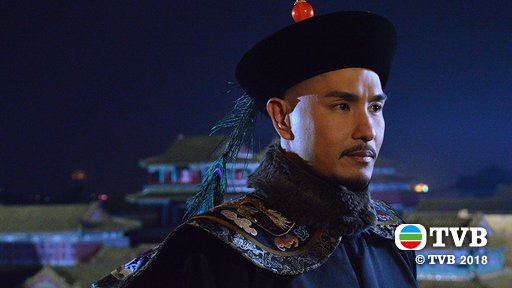
Henry Lo plays Heshen in Word Twisters' Adventure.
After the Li Shiyao case, Heshen's greed and ambitions grew. He began to accept bribes and form his own clique. Because he held so many high-ranking positions, he was able to eliminate his political opponents and insert his cronies into key positions. His corrupt network expanded throughout the bureaucracy and across the nation. They routinely siphoned money from public funds, including military and emergency relief funds. Heshen demanded bribes from government officials and turned the imperial examination system into an auction for government jobs. He also established a system where officials who were found guilty of corruption could buy their way out of punishment. It caused systematic, widespread corruption at all levels of government that lasted well past Heshen's time in power and contributed to the Qing Dynasty's decline.

Heshen lived a luxurious lifestyle. He had hundreds of women and servants living in his home. His mansion was comparable to the imperial palace, constructed using materials stolen from the palace and replicating its designs. He frequently hosted banquets and dined on delicacies with golden utensils. He owned a large amount of furniture, vases, art pieces, silk, clothing, animal hide, and other valuable possessions.
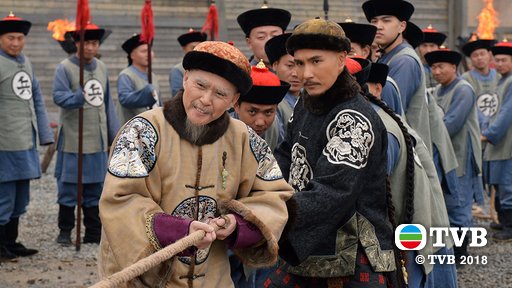


The Qianlong Emperor was well-aware of Heshen's corruption, but never sought to punish him. The emperor acquiesced to Heshen’s corrupt conduct because Heshen filled the palace’s coffers to pay for Qianlong’s extravagant spending and southern expeditions. Heshen was also good at flattery, attentive and knew how to cater to the elderly emperor’s tastes. For example, he spent time studying Qianlong’s poetic style and frequently discussed poetry with the emperor. Qianlong was very fond of Heshen’s literary talents.

A Connection With Nancy Wu?


As the Qianlong Emperor grew older, he often was not able to speak clearly and only Heshen could understand what he was saying. Thus, whenever he held court, he would order Heshen to stand next to him. Heshen would "listen" to what the emperor said and then issue edicts on his behalf. This earned Heshen the nickname as the "Second Emperor".
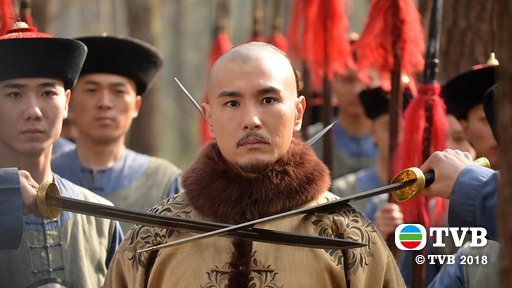

Upon Qianlong's death, the Jiaqing Emperor quickly stripped Heshen of his official titles and ordered for him to be arrested. He was declared guilty of 20 great sins and was sentenced to death by slow slicing. However, his daughter-in-law, the Tenth Princess, pleaded with Jiaqing to allow him to commit suicide. Jiaqing granted the request and Heshen hung himself at his home. His family was spared on account of their relationship with the Tenth Princess.

After his death, it was discovered that Heshen's personal wealth was worth between 800 to 1100 million taels of silver (compared to the government's annual revenue of only 70 million taels of silver). His net worth is estimated to be about $132 billion USD in today's dollars, putting him among the richest individuals in history.

Heshen's former mansion was granted to Jiaqing's 17th brother, Yonglin (Jonathan Cheung in Succession War), while the gardens were given to his 11th brother, Yongsing (David Do in Succession War). Later, the residence was given the Daoguang Emperor's sixth son, Prince Gong (KK Cheung in The Confidant). The mansion is now a museum in Beijing.


Tuesday, June 26, 2018

Succession War Connection

Let’s situate Succession War in the TVB Qing Dynasty world.

As you will recall, Ben Wong played the Yongzheng Emperor in Gilded Chopsticks.

He is the father of the Qianlong Emperor, played by KK Cheung in Succession War. Qianlong retires as emperor after 60 years, passing the throne to his son, the Jiaqing Emperor.

Shaun Tam plays the Jiaqing Emperor in Succession War. It is the same character as Yu Yang in War and Beauty.

Jiaqing’s first Empress is Jess Sum. She is the mother of his eventual successor, the Daoguang Emperor, played by child actor Nono Yeung. He will grow up to be Sunny Chan in Curse of the Royal Harem.

The first Empress (Jess) has already died at the time of Succession War. Selena Li is Jiaqing's Imperial Noble Consort and will eventually become his second Empress. The character becomes Rebecca Chan in War and Beauty and is made Empress Dowager in Curse of the Royal Harem, played by Gigi Wong.

Looking at Jiaqing’s other concubines, Katherine Ho plays Concubine Yu, who will later be promoted to be Consort Yu, a character famously played by Sheren Tang in War and Beauty. Siu Hoi Yan plays Consort Hua, who is Gigi Lai in War and Beauty.

Also, notice how the imperial crown and robes has been "passed down" through the generations.


See Gilded Chopsticks Connection for map before this era
                          ↓
                          ↓


Related: Beauty At War Connection (map of the same era)

Saturday, March 28, 2015

Forbidden City Exhibition

Since it is #MuseumWeek on Twitter, it is a perfect time to write this post that I've been meaning to do for a long time. Last summer, I visited the Royal Ontario Museum (ROM) to see The Forbidden City exhibition. It featured a vast collection of artifacts from the Forbidden City, home to the emperors of the Ming and Qing Dynasty. Here were some of the interesting things:

Clothing

This is the ceremonial robe worn by the young Tongzhi Emperor at his coronation. Compare it with the robes worn by Oscar Leung and Pako Au, who both played Tongzhi in The Confidant.
 

There were different attire for different occasions. On the left is a ceremonial robe worn by the Jiaqing Emperor for the sacrifice ceremony at the autumn equinox. On the right is a ceremonial armour for the Yongzheng Emperor when he performed military inspections.
 

Here are some styles for imperial women. The left picture shows an Empress's ceremonial summer coat and the right picture shows an informal riding jacket.
 

This dress was most likely worn by Empress Dowager Cixi, as it is similar to the dress that she was wearing in the portrait on the right.
 portrait_of_empress_dowager_cixi.jpg

Even animals got special treatment! On the left is a saddle made for the emperor's horse. On the right is an outfit made for an imperial dog. There were special eunuchs assigned to take care of the royal animals.
 

Footwear for men versus women in the palace.


Symbols of Authority

This was the setting of the imperial throne in the Inner Court. It was less lavish than the throne in the formal halls of the Outer Court, but still conveyed the Emperor's royal status. It was surrounded by various objects such as fans with elephant stands, crane candle-holders and luduan (a Chinese mythical creature) figures. Compare it to TVB's setting in The Confidant.
Posted Image

Each emperor inherits the set of imperial seals. Originally, there were 39 seals in the set, each with different titles and purposes. However, the Qianlong Emperor found this to be confusing and reduced the set to 25 seals. The remaining seals were placed in a collection at the old Manchurian palace, including this one, which had the inscription "皇帝的寶" ("Treasure of the Emperor").
 

The Yongzheng Emperor had this special seal made for himself. It had the phrase "為君難" ("being ruler is difficult") to remind himself to be a diligent ruler.


This is an imperial edict issued during the Yongzheng era, written in both Chinese and Manchu.
 

This is an example of a "tally" that was used by anyone who wanted to enter or exit the Forbidden City. There were two pieces to a tally - one with the words raised and one with the words carved into it. Anyone who wanted to pass through the gates had to have one piece of the tally, which they would hold up against the guard's piece. If the two pieces fit together, they would be allowed to pass.


Tableware

This is a rare chicken cup from the Ming Dynasty. Emperor Chenghua's mother was particularly fond of small utensils, thus the Emperor especially ordered for this cup to be made for her. The unique thing about the cup is the way the colours were applied. Using a technique called doucai (鬪彩), the colours were painted both under and over the glaze. Only a few of these original cups survive to this day; one of these cups was sold for $36 million in an auction.


These are plates used in Tongzhi's wedding to Lady Alute (Natalie Tong in The Confidant). Tongzhi was one of only few Qing emperors who married while occupying the throne, thus it was a grand occasion for celebration. In particular, 10,000+ wedding wares were ordered to be made. It took five years to make all the pieces before the wedding. They contained symbols of good fortune, such as children playing (left) and the Chinese character for "happiness" (right).


This food basket could hold everything that the Emperor needed for a picnic. It had a silver wine pot, six wine cups, ten dishes, a large silver plate and ten sets of chopsticks.


Arts and Literature

Portraits of the Yongzheng Emperor. Does Ben Wong look like him in Gilded Chopsticks?


When he was still a prince, Yongzheng commissioned a set of paintings of 12 beautiful women. They featured the ladies engaged in various leisurely activities with scenery from the courtyard in the background. The paintings were mounted on a screen in the prince's favourite study. It is uncertain who exactly these women were; they may have been his concubines. (Could it have been Joey Meng from Gilded Chopsticks?)


This is a compilation book of poems that were written by the Qianlong Emperor. Throughout his lifetime, he composed more than 42,500 poems!


Friday, March 14, 2014

Manchu Han Imperial Feast


The Manchu Han Imperial Feast (滿漢全席) is a grand banquet in Chinese cuisine. It is featured in episode 25 of Gilded Chopsticks.

The Feast originated during the Qing Dynasty. At that time, there was a lot of societal tension between the Manchu and Han. For his 66th birthday, the Kangxi Emperor decided to hold a grand banquet and invited Manchu and Han officials to dine together, in hopes of creating peace between the two ethnic groups. The full details of the Feast were first recorded during the Qianlong era.

The Feast had over 300 dishes, featuring both Manchu and Han dishes. Typically the Manchu dishes were sampled before the Han dishes. Among the dishes were four sets of “Eight Delicacies” from the mountain, sea, sky and forest. The ingredients used included monkey brain, shark fin, bear’s claw and camel’s hump.

There is a specified procedure for the Feast. When the guests arrive, they would first wash their hands and face. They are served with a cup of tea and appetizers, and are free to mingle. Once the tables are set, the guests take their seats and the Feast officially begins. They would eat the fruits first, followed by four cold dishes with wine, and then four hot plates. They will drink three rounds of wine before a main course is brought out. After the main course, the guests take a break to wash their face while the tables are cleared for the next round of food. There are several more rounds of food. Rice and porridge is served in the final round to bring the Feast to an end. The guests are offered toothpicks and water to wash their faces before leaving the banquet.

The Feast was served over six meals, spanning three days. It was separated into the inner-palace and outer-palace banquets. The inner-palace banquet was reserved for only the Emperor, imperial family and top officials. Other officials attended the outer-palace banquet. All attendees had to wear full court dress and entered the dining room by order of their rank.

Nowadays, it is rare to have an authentic Manchu Han Imperial Feast since many dishes used meat from endangered species. Moreover, the recipes and cooking methods are no longer known. A typical replication of the Feast today consists of 108 dishes.


Sunday, February 23, 2014

Gilded Chopsticks Connection

It is time to complete the relationship chart for the Qing Dynasty!

Let’s go back to The Life and Times of a Sentinel. Sunny Chan was the Shunzhi (順治) Emperor, the first Qing emperor to rule over all of China.

Shunzhi (Sunny) was succeeded by his son, the Kangxi (康熙) Emperor, played by Power Chan.
  • Gilded Chopsticks begins during the later reign of Kangxi, now played by Elliot Ngok.
  • In GC, Power is the 2nd eldest son of Kangxi (himself/Elliot). He is named as crown prince, but is twice-deposed.

In TLTOS, Elaine Yiu was Kangxi’s (Power in TLTOS) 3rd Empress. She died one day after being named Empress. Grace Wong was one of Kangxi’s concubines. She is the mother of his eldest surviving son.

In GC, Kangxi’s (Elliot) consort is Rosanne Lui. She was posthumously named as his 4th Empress. Rosanne is the mother of Kangxi’s fourth son, the future Yongzheng (雍正) Emperor, played by Ben Wong. She is also the mother of the 14th prince, Owen Cheung.

Louis Cheung (8th), Derek Wong (9th) and Matthew Ko (10th) are all sons of Kangxi (Elliot), bore by different concubines.

After a lengthy 61 years on the throne, Kangxi (Elliot) dies and is succeeded by the Yongzheng Emperor (Ben).

Yongzheng (Ben) takes Nancy Wu as his concubine. She gives birth to three children, but they all die prematurely.

Yongzheng’s 2nd Empress gives birth to his eventual successor, the Qianlong (乾隆) Emperor. 


Relationship map continues with:

Beauty at War Connection
The Confidant and Curse of the Royal Harem Connection


The full Qing Dynasty relationship map (click to see):


Sunday, February 16, 2014

Historical Context - Nanshan Case


In episode 1 of Gilded Chopsticks, one of the imperial chefs attempted to poison the Kangxi Emperor (Elliot Ngok). He said he was seeking revenge for a man named Dai Mingshi, who had been executed by Kangxi.

Dai Mingshi (戴名世) was a scholar that lived during the reign of the Kangxi Emperor. He authored a text called the Nanshan Collections (南山集), which recounted the events of the Southern Ming Dynasty.

The Southern Ming Dynasty was a politically sensitive topic at the time. It had been formed by the remnants of the fallen Ming Dynasty. The Qing court viewed it as a rebellious effort. Yet Dai appeared to be glorifying them in his writings.

In his book, Dai made the argument that the Southern Ming Dynasty should be recognized as an official dynasty alongside the Ming and Qing Dynasties. He referred to the Southern Ming rulers as “Emperors” and used their era names instead of the Qing era names. He praised Ming loyalists and condemned the Qing army’s massacre of civilians.

Dai was reported to authorities by his rival, Zhao Shenqiao (趙申喬). The Kangxi Emperor was naturally infuriated. Dai was executed on charges of insolence. Kangxi spared the lives of Dai’s family and associates* and sent them to live in exile instead. The Yongzheng Emperor pardoned all those involved when he ascended to the throne.
* A historical inaccuracy in Gilded Chopsticks where the would-be assassin chef said that Dai's family was executed along with him.

Many historians feel that Dai had been unfairly accused of insolence. They believe that his book and arguments were merely meant for academic discussion. In his early life, Dai indeed held anti-Qing sentiments. However, during his later life, his attitude towards the Qing had clearly changed and he even served as a government official. His rivalry with Zhao and his arrogant attitude, which had angered many of his colleagues, likely factored in his downfall.

This case, which is known as the Nanshan Case (南山案), was one of many episodes of literary inquisition during the Qing Dynasty. Literary inquisition is the official persecution of scholars for their writings. Scholars could be punished or killed for the use of a single word or phrase that was deemed offensive. The practice was especially prominent during the Qing Dynasty because the Manchu were an ethnic minority ruling over China. As a result, the Qing emperors were very sensitive to anything that appeared to question the legitimacy of their rule.


Spoiler (revealed in episode 11-12):


Friday, February 14, 2014

Food Series

Just watching these series is enough to make your stomach growl!

Gilded Chopsticks


A rich boy (Wong Cho Lam) is fearful that he will become a slave because of food. Although he desperately tries to avoid this fate, he ends up in the palace anyways, working as a chef. He unexpectedly gets caught in the royal succession battle.


Yummy Yummy


Five contestants from a game show become good friends, but their friendship is tested as they try to manage a restaurant together. A collaboration between TVB and Singapore, featuring then-young stars Kevin Cheng, Charmaine Sheh, Raymond Lam and Tavia Yeung.


The Rippling Blossom


Two brothers work together to run the sushi bar left to them by their father, but competition and jealousy soon cause a rift between them. They have a final contest to determine the ultimate winner.


The Gâteau Affairs


The trainees at a bakery each discover their passion for baking cakes while learning from the master chef (Joe Ma). Meanwhile, a "Cake Robin Hood" has been leaving cakes for less fortunate children.


Wasabi Mon Amour


A talented Japanese chef (Michael Tao) helps his crush (Louisa So) become a food programme host even though she knows nothing about cooking. His love for her is challenged when he finds out she will resort to any tactic to boost ratings.


The Season of Fate


A widow (Esther Kwan) struggles to maintain the family restaurant and take care for her husband’s first wife, who is mentally ill. Luckily, she has the help of her good friend (Derek Kwok). Problems arise when a con-artist (Roger Kwok) arrives at the restaurant.


Happy Ever After


A small-time chef (Bobby Au-Yeung) with an "Emperor's Tongue" invents new dishes with his partner (Marianne Chan), catching the attention of the Qianlong Emperor (Kwong Wah). Bobby is invited into palace to become an imperial chef, where he is faced with a choice between love and loyalty.


A Taste of Love


Flora Chan enlists the help of a temperamental chef (Lawrence Ng) in order to save her father's famous restaurant. She also encourages her half-brother (Raymond Lam) to become a hard-working and responsible man.


A Recipe for the Heart


A mysterious man (Bobby Au-Yeung) purchases the majority share of a restaurant owned by Lydia Shum and Esther Kwan. He teaches them how to cook in order to run the restaurant on their own. The star-studded cast also includes Louis Koo, Jessica Hsuan and Maggie Cheung.


Food of Love
File:FoodofLove.jpg

An aspiring chef (Wong He) chases his dream with the help and encouragement from his good friends. He achieves fame and fortune, but discovers the consequences that come along it... This series was the representative work in Wong He's early career.


Jewel in the Palace


A palace maid faces many obstacles as she works her way up in the imperial kitchen. She goes on to become the first female physician in the Korean royal court. The drama set an all-time high for viewership, peaking at 50 points.