Showing posts with label Steven Ma. Show all posts

Saturday, July 14, 2018

Deep in the Realm of Conscience Thoughts


Producer: Mui Siu Ching
Genre: Historical
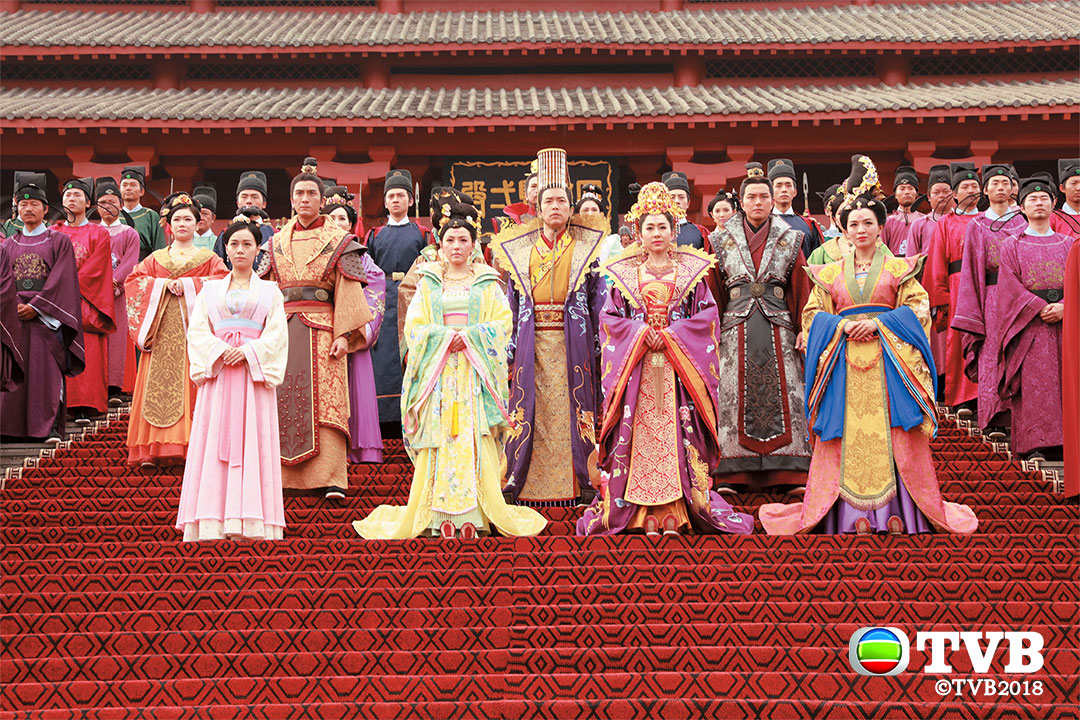
Cast: Steven Ma, Nancy Wu, Annie Liu, Kenneth Ma, Edwin Siu, Alice Chan, Chrissie Chau, Jacqueline Wong

  • This series tried to do too much. It started as a historical drama, became a detective series, and then turned to palace scheming, with a mixture of romance and failed comedy in between. The series had a large cast, which meant each also had their own story to add to the clutter. 
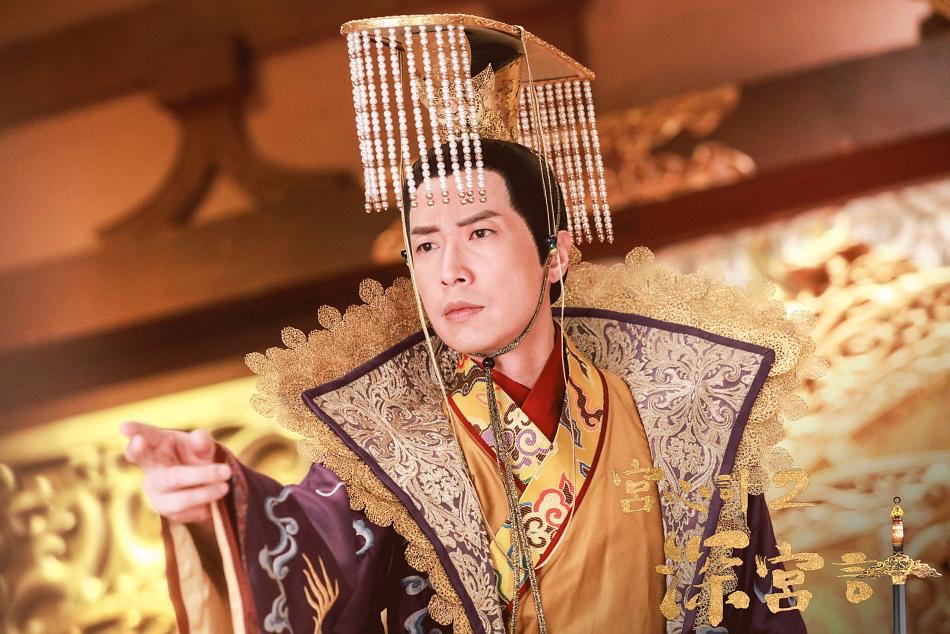
  • So much time was wasted on the useless story lines that the final face-off between the Emperor (Steven Ma) and Princess Taiping (Alice Chan) turned out to be a huge letdown. The whole climax was half-baked and poorly edited to fit within a span of less than one episode. 
  • The "scheming" in the series was predictable and overused. Anyone who has watched another palace series can guess what is coming next. 
  • I was expecting a lot more scheming between the four bureau heads. It was a waste of the veteran actresses they lured out of retirement for this series. 
  • The rhyming lines were ANNOYING. The effort to combine a serious historical drama with Can't Buy Me Love style humour was terrible. 
  • The lost sister plot was a big waste of time. The final revelation about the sister's murderer was a mere footnote and irrelevant at the end.
  • Have you ever seen a palace with so few people working there? Must have spent all the money on the costumes and sets. 
  • Speaking of work, the duties of the palace maids apparently consist of spying on guards bathing in the river, gossiping, and romancing. There is also no regard for palace rules. Servants and maids can enter whenever they please and speak out of turn without consequence. 
  • Annie Liu is the mandatory goody two-shoes character, which meant that I was automatically going to be annoyed with her, but her accent only made it worse. Why didn't they dub her lines? Annie does look gorgeous in ancient costume though. 
  • Alice Chan had a great presence that was befitting of a princess and trounced all the other women. But her character seemed to have faded into the background during the second half of the series. 
  • I like seeing new faces in TVB dramas, but there was no need to have Chrissie Chau play this concubine role. I was waiting for her character to turn evil, but she remained naive and dumb until the end. 
  • Steven Ma's performance is all about his subtleness. Watch those subtle changes in his facial expressions. It is acting at its finest. 
  • Nancy Wu and Edwin Siu both turned in solid performances, but they didn't really stand out. 
  • Kenneth Ma already seems like a boring person in real life, he does not do well with a boring character like this one. The romantic line between him and Jacqueline Wong was forced and should have been cut.
  • Savio Tsang deserves a mention for the excellent scene he did in jail before his execution. 
  • Hands down the most cringeworthy acting was by Andrew Yuen as the imperial physician. The scene where he was found guilty and pleading for his life was comically bad. 

Rating: 3/5. No sequel please!

Thursday, June 07, 2018

Historical Context: Emperor Xuanzong

深宮計

Emperor Xuanzong of Tang (唐玄宗) was the ninth emperor of the Tang Dynasty. He presided over one of the golden ages of the Tang Dynasty during his first three decades on the throne, but also saw the beginning of the dynasty’s decline in his later years. His reign of 43 years is the longest of any Tang emperor.

Xuanzong was the third son of Emperor Ruizong (唐睿宗). Although Ruizong was nominally the emperor, the real power resided with the empress dowager Wu Zetian (武則天). When Xuanzong was five, his father abdicated in favour of Wu Zetian, who officially became female Emperor. Growing up, Xuanzong was reportedly a talented and courageous young man and was adored by his grandmother.

When Xuanzong was twenty, Wu Zetian was overthrown in a coup and Xuanzong’s uncle, Emperor Zhongzong (唐中宗) retook the throne. However, power was concentrated in the hands of his wife, Empress Wei (韋皇后). When Zhongzong died, his 16-year old son ascended to the throne as Emperor Shang (唐殤帝), with Empress Wei acting as regent. Fearing that Empress Wei would usurp the throne like Wu Zetian, Xuanzong and his aunt, Princess Taiping (太平公主), launched a coup. They killed Empress Wei and executed many of her allies. They forced Emperor Shang to step down just 17 days into his reign and convinced Xuanzong’s father, Ruizong, to reclaim the throne. For his efforts in the successful coup, Xuanzong was named as crown prince.

During his time as crown prince, Xuanzong's relationship with his aunt, Princess Taiping, became increasingly hostile. Princess Taiping had initially supported him to be crown prince because she thought he could be easily manipulable, but when she discovered that this was not the case, she tried to have him removed as crown prince. However, much to her chagrin, Ruizong decided the best way to resolve the hostilities was to abdicate and pass the throne to Xuanzong.


As emperor, one of Xuanzong's first priorities was to remove Princess Taiping from power. He got his chance when he received a report that she was plotting to overthrow him. He personally led soliders to arrest and execute her associates. Hearing of this, Princess Taiping fled to a temple and hid for three days. When she finally emerged, Xuanzong ordered her to commit suicide.

After ridding the court of Princess Taiping's influence, Xuanzong was finally able to rule on his own. He proved to be a capable ruler, leading the country into a golden age of prosperity. Politically, he brought stability to the court after decades of infighting and coups within the palace. He promoted competent officials to be his advisers and purged the government of officials who gained their positions through money or connections. Economically, Xuanzong re-established trade routes on the Silk Road and Grand Canal and ordered for a nationwide census to be conducted to update the tax rolls and improve land distribution. These measures vastly increased the nation's tax revenues and grain reserves. Militarily, he abolished the conscription of farmers. Instead, he recruited career soldiers for the army. He reorganized the border forces to centralize control under military governors and improve border defense. Culturally, he commissioned officials to search for literature from all eras, compiling a library with more than 50,000 works. A talented poet, calligrapher and musician himself, Xuanzong created academies to promote the arts. Two of most famous Tang Dynasty poets, Li Bai (李白) and Du Fu (杜甫), lived during this period.

Xuanzong (Kwong Wah) and Yang Guifei (Anne Heung) in The Legend of Lady Yang
As the country flourished in prosperity, Xuanzong gradually grew tired of public life. He began indulging in the pleasures of court life. He particularly enjoyed spending time with his favourite concubine, Yang Guifei (楊貴妃). He left political matters to his advisers – among them, Yang Geifei's cousin, Yang Guozhong (楊國忠). The country was soon thrown into disarray due to Yang's mismanagement and corruption. The citizens faced high taxes and natural disasters, the military suffered blowing defeats, and the government became devoid of talent.

Meanwhile, An Lushan (安祿山) was a military general who had gained the favour of Xuanzong and Yang Guifei. He was given command over three large military contingents in the north, where he essentially operated as a warlord. However, he harboured higher aspirations. After many years of planning, An launched a rebellion near modern-day Beijing. Due to Xuanzong's earlier military reforms, most of the Tang army was stationed near the borders, leaving the country's interior lightly defended and allowing An's forces to easily make their way into the heartland. An captured Luoyang, the eastern capital, and declared himself emperor of a new Yan Dynasty. After a series of military missteps by Xuanzong, the path was clear for An to march to Chang'an, the western capital, where the emperor was located.

As An's forces approached, Xuanzong fled the capital with Yang Guifei. Along the way, the soldiers that were accompanying the emperor grew angry at the Yangs, whom they felt were responsible for the country's plight. The soldiers killed Yang Guozhong, then surrounded the emperor and demanded that he put Yang Guifei to death. In order to pacify his angry troops, Xuanzong reluctantly ordered his personal eunuch to strangle Yang Guifei.

After Yang Guifei's death, Xuanzong continued westward, while his son, the crown prince, stayed behind to plan a counterattack. On the advice of his officials and without consulting with Xuanzong, the crown prince took the throne and declared himself as Emperor Suzong (唐肅宗). When Xuanzong received this news, he affirmed the new emperor's proclamation and took the title of Retired Emperor. After Emperor Suzong recaptured Chang'an, Xuanzong moved back to the palace, where he lived until his death at the age of 76.

Monday, May 21, 2018

Deep in the Realm of Conscience Theme Song

Nancy Wu sings the theme song for Deep in the Realm of Conscience, entitled "No Regrets, No Qualms" (無悔無愧).


The sub-theme song is "Bright Moon and Ocean" (明月與海), by Steven Ma and Nancy Wu.


The ending theme song is by Hana Kuk, entitled "Moths Pounce on Fire"(飛蛾撲火).


Overview - Deep in the Realm of Conscience


During the reign of Emperor Shang of Tang, Steven Ma and his aunt Alice Chan stage a political coup. They summarily execute Michelle Yim, who was encroaching on the throne, and support Lee Lung Kei in reclaiming the throne. The palace appears to have returned to a peaceful state, but in fact, there is a surging undercurrent... On the imperial court, the winds are changing as Steven and Alice break into separate camps and become like oil and water. In the inner palace, Nancy Wu leads the Imperial Household Bureau in a fight with all the other concubines as they try to outwit each other. Some people will trade their soul for power, while others will sacrifice everything for their loved ones. The genuine characters of imperial guard Kenneth Ma, revenge seeker Edwin Siu, and palace maids Annie Liu and Jacqueline Wong add a stroke of romance in the inner palace... In the inner palace, unsolved cases are rampant. Careful investigation reveals a shocking secret that has been hidden for many years. Behind the palace's high walls are scenes with soul-stirring emotions of love, hate, passion and revenge!

Thursday, February 12, 2015

Historical Context: Nip Siu-sin

My "Spiritual" Ex-Lover is based on one of the short stories in Strange Tales from a Chinese Studio, written by Pu Songling.

The Story of Nip Siu-sin

Nancy Sit as Nip Siu-sin & Edwin Siu as Ling Choi-sun
Nip Siu-sin (聶小倩) is a girl who died at the age of 18 and lives as a ghost inside a temple. One day, a scholar named Ling Choi-sun (寧采臣) visits the temple, hoping to find temporary shelter. At night, he encounters the beautiful Siu-sin. She first tries to seduce him and then attempts to lure him with money. He rejects her both times. Admiring his uprighteousness, Siu-sin confesses that she is being forced by a demon to kill people. Upon hearing this, Ling enlists the help of his demon-slayer friend, Yin Chik-ha (燕赤霞), to kill the demon.

Angela Tong as Yin Chik-ha
Ling then takes Siu-sin back to his home, where he lives with his mother and sickly wife. Initially, his mother appears to be afraid of Siu-sin. However, Siu-sin eventually wins over the elderly lady with her sincerity. Siu-sin continues to stay with Ling's family, doing the household chores and taking care of his mother. After Ling's wife dies, he marries Siu-sin. As she has been in contact with humans for a long time, she regains human qualities and has two children with Ling.


Author's Profile: Pu Songling

Steven Ma as Pu Songling in Ghost Writer
Pu Songling (蒲松齡) is a writer who lived during the Qing Dynasty. As a young scholar, his goal was to achieve success in the imperial examinations. However, despite doing well in the local exams, he never found success at the provincial level. Disheartened, he turned to writing. His most famous work is Strange Tales from a Chinese Studio (聊齋誌異).

Strange Tales is a collection of short stories featuring supernatural beings. The stories generally tell of an interaction between humans and the supernatural, such as ghosts, foxes, demons or other spirits. Legend has it that Pu Songling ran a teashop and offered free tea to any passerby who could tell him a story (although historians believe this is false since Pu Songling was poor for most of his life and would not have been able to afford to set up a teashop).

There are several themes in the book which reveals the author's views about society. Via his stories, Pu Songling criticized the corruption in the feudal system and imperial examination process. He also admired pure, faithful love between men and women, particularly between poor scholars and beautiful female spirits. In addition, he hoped to educated people by injected Confucian and Taoist moral principles into his stories.

At the advanced age of 71, Pu Songling was granted the rank of "gongsheng" (a top rank for scholars at the local level) in honour of his literary achievements. He died a few years later. Strange Tales was formally published after his death. The book is regarded as a classic for its rich content, brilliant structure, elegant prose and overall creativity.


Sunday, February 01, 2015

Historical Context: Tui Bei Tu


The tui bei tu is featured in the drama A Change of Destiny, although the poems used in the drama are not in accordance to the actual ones in the book.

The tui bei tu (推背圖) is a prophecy book that predicts the future of China. Its authorship is most often attributed to Li Chunfeng (李淳風) and Yuan Tiangang (袁天罡), who wrote the book at the request of Emperor Taizong of Tang. The tui bei tu is one of the seven famous prophecy books of ancient China.

The book contains 60 drawings, each with a corresponding poem. Each set of drawing and poem (excluding the first and last) is supposed to predict an event in Chinese history. The predictions span two millenniums, from the Tang Dynasty to the present.  Most scholars agree on the interpretations for the first 39 prophecies, but the remaining interpretations are significantly more controversial. By some accounts, 55 of the 58 prophecies have been fulfilled, while other sources have the number at around 47.

Image result for 推背图
Drawing #60

The book's name, which translates to "Back-Pushing Sketch", derives from its last set of poem and drawing. Allegedly, Li got so absorbed with the task that he predicted two millenniums into the future. Eventually, Yuan pushed him in the back and said "There is too much to say. Let's go rest instead."

Inevitably, the authenticity of the prophecies has been questioned. Since the poems and drawings are cryptic in nature, their meanings are open to interpretation. Moreover, the book was banned and ordered to be destroyed numerous times throughout history. There were multiple versions in circulation, thus making it difficult to verify the original contents.

Nonetheless, examining the events contained in the tui bei tu presents a good overview of the history of China from the Tang Dynasty onward.

Tang Dynasty


Five Dynasties Ten Kingdoms


Song Dynasty


Yuan Dynasty


Ming Dynasty


Qing Dynasty


Republic of China


*Prophecies #40 onwards deal with modern China. There is a lack of consensus for the interpretations, thus, I will not provide a translation.

Leave a comment if you want to know more about any of the historical events above.

Tuesday, April 08, 2014

Storm in a Cocoon Review


Producer: Leung Choi-yuen
Genre: Mystery, family
Cast: Steven Ma, Tavia Yeung, Evergreen Mak, Maggie Siu, Natalie Tong

Review:
I’ll admit I thought Storm in a Cocoon would have the cliché family infighting storyline. The series turned out to a pleasant surprise. It had an excellent cast and a solidly written plot. The series is essentially divided into two parts: a whodunit mystery for the first 20 episodes and then “property protecting”, as the Chinese title suggests, for the last 12 episodes.

The mystery part was very intriguing and suspenseful. There is a long suspect list as everyone seems to have something to hide. It was fun crossing off the names along with Ka Yeung (Steven) and Bing Bing (Tavia) in the series. With each crossed-off name, a new secret is exposed and a new direction must be taken. The whole story was woven together masterfully, with each clue, secret or partial flashback leading the audience to think that one person did it, but there turns out to be a very logical explanation for their actions. As a rule, the ultimate culprit will be the least unexpected one. Overall, a delightful segment to watch.

The second part of the series reverts to a power struggle and revenge story. While it is a classic set-up, this series manages to throw in many creative plot twists to keep the audience on the edge. Unfortunately, the scriptwriters run out of creative juices a little too soon and put together a finale that rips-off Titanic and TVB’s own Beyond the Realm of Conscience. It is still a good part two to follow up the thrilling mystery.

The series features a strong cast, anchored by Stevia. Steven and Tavia undoubtedly share great chemistry, this being their fourth partnership. They are a couple that balked against all tradition and adversity. Their deep love is apparent with the way they interact and look into each other’s eyes. As for their individual performances, Steven does an excellent job portraying Ka Yeung, a man who was forever changed by his experiences in the military. He is able to show that inner turmoil in the scenes where he is alone. Meanwhile, I didn’t like Tavia’s loud-mouthed character in the beginning, but thankfully, she tones it down when she was put in charge of the silk factory. I love the scene where she collapses against the wall, crying. It shows how despite her fortitude, she is still, at the very heart, a woman deeply affected by her husband’s absence.

In contrast, Evergreen Mak and Maggie Siu were a couple that was unable to survive through the adversities. They are both strong veteran actors who were able to display this tragedy on-screen. However, Evergreen lacked presence until he turned evil. Even then, he didn't give off an evil vibe, but that could be because his character isn't really evil at the core. Maggie, on the other hand, was brilliant in portraying a woman who is both strong and weak – strong in defending her sorority against harm, but weakened by her love for Evergreen. In the end, her character was useless in preventing his misdeeds and died an unnecessary death.

Matt Yeung and Natalie Tong were a side story, though they had their cute moments. Matt excels in these shy, boy-next-door roles. Yeung Chiu Hoi was decent being a traumatized younger brother. Stephen Wong is suitable as a villain. Akina Hong had many layers in her performance of a very interesting character. KK Cheung makes a great villain and he even had the local accent (Shunde is actually his native town). All others unmentioned are okay, but no standout performances.

Rating: 4.5/5


Saturday, March 22, 2014

Ill-Fated Couples


Steven Ma and Tavia Yeung


2006 - Land of Wealth - SPLIT UP
2009 - Sweetness in the Salt - SPLIT UP
2010 - Cupid Stupid - SPLIT UP
2014 - Storm in a Cocoon - ???


Vincent Wong & Nancy Wu


2010 - Gun Metal Grey - DEATH
2013 - Season of Love - SPLIT UP
2014 - Coffee Cat Mama - HAPPY ENDING


Wayne Lai & Nancy Wu
Posted Image

2009 - Rosy Business - DEATH
2011 - Forensic Heroes III - SPLIT UP; DEATH
2012 - The Confidant - DEATH (HAPPY ENDING in alternate)


Bosco Wong & Linda Chung


2008 - Moonlight Resonance - SPLIT UP
2008 - Gem of Life - SPLIT UP
2012 - Witness Insecurity - DEATH


Raymond Lam & Kate Tsui


2008 - The Four - SPLIT UP
2012 - Highs and Lows - DEATH


Moses Chan & Sonija Kwok


2002 - Love and Again - SPLIT UP
2002 - Where Legend Begins - DEATH
2004 - Family Man - SPLIT UP
2006 - Land of Wealth - SPLIT UP

Monday, February 17, 2014

Storm in a Cocoon Theme Song

The theme song for Storm in a Cocoon is "Fate" (天意), sung by Steven Ma.


The sub-theme song is "Thinking of You" (想起你) by Jinny Ng.


Overview - Storm in a Cocoon
Storm in a Cocoon Promo Clips

Tuesday, January 28, 2014

Overview - Storm in a Cocoon


Elliot Ngok owns the largest silk factory in Guangdong during the Republic era. But he is getting old and has left his eldest son (Evergreen Mak) and daughter (Akina Hong) in charge of running the business. Unfortunately, Akina commits suicide, albeit under mysterious circumstances. Elliot’s third son, Steven Ma, returns home from his job as a military medic to manage the family business. Steven finds too many unresolved questions surrounding Akina’s death. Tavia Yeung, Akina’s good friend and a worker in the silk factory, share the same suspicions. They decide to investigate together, but what they discover are the complex relationships between the family members and factory workers. Everyone appears to be suspicious, leaving Steven to feel pressure from all sides.

A group of unmarried women at the silk factory regard Maggie Siu as their leader, yet Maggie treats Tavia as her enemy. Natalie Tong, a new worker at the factory, joins the clique of women, but she actually has an ulterior motive. Meanwhile, Steven is deeply attracted to Tavia’s brave and righteous character. Just as they are developing their love for each other, Tavia’s fiancé (Raymond Cho) suddenly reappears after having been missing for many years. This sets off a big storm that ultimately leads to bloodshed on the mulberry fields. The answer to Akina’s death turns out to be very surprising. As karma would have it, the family is trapped, like a silkworm in a cocoon. Steven and Tavia are determined to protect the family business, but are faced with numerous conflicts…


Storm in a Cocoon Promo Clips


Sunday, October 06, 2013

Couples We Have Not Seen

Tired of seeing the same pairings over and over again? Bet you haven't seen these couples before...

Linda Chung & Kenneth Ma


They were only together briefly when Kenneth made a cameo appearance in Yes Sir, Sorry Sir.


Ruco Chan & Kate Tsui


Raymond Lam & Fala Chen


Wayne Lai & Tavia Yeung


Myolie Wu & Steven Ma


Ron Ng & Niki Chow


Bosco Wong & Selena Li


They appeared as a couple in a commercial for Ocean Park.


Which fresh pairing would you like to see most?


Saturday, August 04, 2012

Common TVB Pairings

 1.       Michael Tao & Kenix Kwok

 {1}

The first on-screen couple that I can remember. Absolutely loved them in the Detective Investigative Files franchise. By their own estimates, they have filmed in 200 episodes together.

1994 – CATWALK俏佳人
1995-1997 – Detective Investigative Files I – III
2004 – Shine on You
2005 – Love Bond


2.       Joe Ma & Jessica Hsuan

 {2}

Jessica has recently been named “Hostage Queen” for being held hostage 24 times in her filming career. Joe has probably saved her countless times. Joe said he enjoys working with Jessica because of her professionalism and punctuality.

1999 – 寵物情緣
2004 – Lady Fan
2004 – 一屋兩家三姓人
2007 – Drive of Life
2012 – Tiger Cubs


3.       Moses Chan & Charmaine Sheh

 {3}

Being the big brother and sister of TVB, Moses and Charmaine certainly has amply opportunity to work together in big productions.  They are both favourites of producers Mui Siu Ching and Jonathan Chik. With Charmaine’s reputation as “姣佘”, it’s surprising there are no rumours about this pair.

2004 – War and Beauty
2005 – The Dance of Passion
2009 – Beyond the Realm of Conscience
2010 – Can’t Buy Me Love
2011 – When Heaven Burns
2012 – 4 In Love


4.       Steven Ma & Linda Chung

 Steven Ma and Linda Chung{4}

Steven is always paired with younger actresses to mentor them. His most frequent partner has got to be Linda. Despite a 10+ year age gap, they have surprisingly good chemistry. Of course, working together so many times doesn’t hurt. From Linda’s first series, Virtues of Harmony II, to Steven’s last series at TVB, Daddy Good Deeds, this pair has been together five times.

2004 – Virtues of Harmony II
2007 – A Journey Called Life
2009 – A Watchdog’s Tale
2009 – Ghost Writer
2012 – Daddy Good Deeds


5.       Ron Ng & Kate Tsui

 {5}

Best-friends on and off the screen. Their close interactions reportedly made Ron’s (now-ex) girlfriend Viann Zhang unhappy. To me, it seems they are like good “brothers” instead of lovers.

2005 – On The First Beat
2007 – Brink of Law
2011 - 你們我們他們
2011 – Wax and Wane
2011 – Forensic Heroes III


6.       Him Law & Mandy Wong

 {6}

These two seem to be TVB’s next golden couple. I personally don’t like Him too much because of his off-screen scandals, but I find Mandy to be quite an actress. Both are being heavily promoted and have collaborated many times, though not all of them as a couple.

2010 – Suspects in Love
2012 – L’Escargot
2012 – The Hippocratic Crush
2012 – Tiger Cubs
Upcoming – A Chip Off the Old Block II