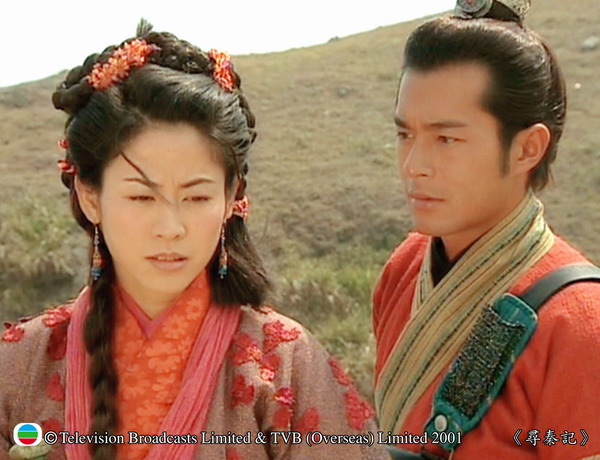
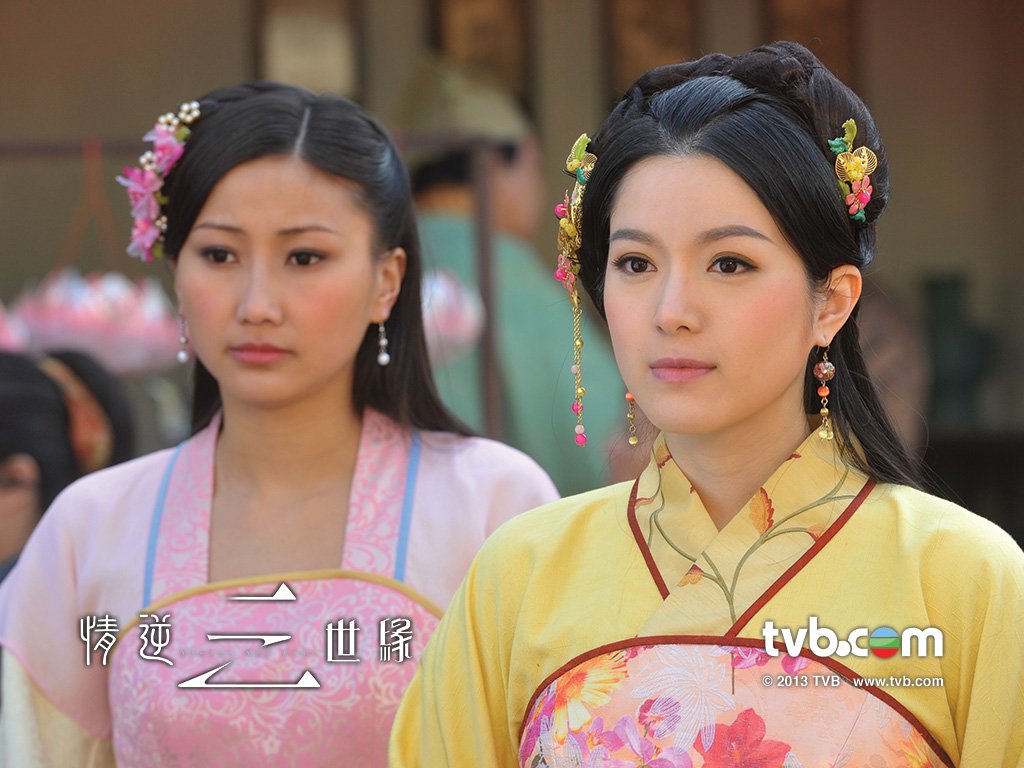
One transfer and a few complex cases leads Traffic Accident Investigation Unit Chief Inspector Bobby Au-Yeung to work closely with CID Superintendent Joey Meng. Both understand and appreciate each other. Logistics company heiress Jeannie Chan believes Bobby broke up her family and hates him. Bobby once promised Jeannie’s late mother that he will be accommodating towards her, but he discovers that Jeannie is becoming increasingly close with lawyer Joe Ma and triad leader Pierre Ngo. Bobby also learns that his colleague and good friend Matt Yeung is Jeannie’s ex-lover. To guide her back to the right path, Bobby and Matt target the brothers Joe and Pierre. Bobby and Joe’s values are different and each has their own interpretation of justice. When the two men meet, a battle of wits is quietly triggered.
The mentor-mentee pair of Bobby Au-Yeung and Moses Chan are widely lauded in the banking industry. However, to advance his career, Moses purposefully transfers Bobby to a foreign office. Unfortunately, Bobby's plane crashes on the way there. When he awakens, he discovers that he is now in the body of an post-'90s youth, James Ng, who lives with his aunt, Maggie Siu. Bobby watches as Moses flirts with his wife, Kristal Tin, and wealthy heiress Ali Lee. As Bobby tries to figure out how to recover what he had lost, he meets a sixty year old man, Louis Cheung. The two click instantly. It turns out that Louis experienced the same fate of switching bodies. The two of them investigate how they can return to their own bodies. When Bobby discovers that James is actually the banker Benz Hui's illegitimate son, he and Louis plan a revenge scheme. But it unexpectedly causes Moses to fall from a building and suffer serious injuries. Bobby finally realizes that he misunderstood Moses. The three of them try to get close to Benz and his family. Bobby enters the bank and starts working from the bottom. Moses ruins the engagement between Ali and his friend Sammy Leung. Louis drives a wedge between Benz's second daughter Elena Kong and her husband Eddie Kwan. As this cross-generation battle gradually spreads, it builds a unexpected new world...
When his father (Lau Kong) suddenly dies, Bobby Au-Yeung, as executor of his father's will, summons his younger siblings home. According to their late father's wishes, the four siblings must live together for nine months before they can sell the house. Against her Mainland husband Tsui Wing's objections, Joyce Tang moves back to Hong Kong with her daughter. The profit-minded Jonathan Cheung and his equally snobbish wife, Koni Lui, immediately report home. Youngest brother Bob Cheung, who was on a work vacation, also returns home quickly upon hearing the news. Daily frictions occur between the family. Bobby discovers that a pair of happy spirits, Wu Fung and Helena Law, have been living in the house for a long time. The two seniors use their magic to help the family resolve disputes, but they often make things worse, producing many comedic moments. The old house is in need of repairs, leading Bobby to hire technician Nancy Wu. The two of them clash immediately and constantly squabble. But Nancy develops an indissoluble bond with the family and also finds a cure to her chronic insomnia...
Eminent Northern Song Dynasty writer, Bobby Au-Yeung, is unable to forget about his late wife and hence, turns a blind eye to his sister-in-law, Joey Meng's active pursuit of him. However, the food lover in him is eventually swayed by Joey's braised pork dish and they finally get married. Bobby thought life would be perfect after marriage, but a slew of family problems is making his head spin! On one hand, he must worry if his sister, Jacqueline Wong, is being tricked by the flirty scholar, Vincent Wong. On the other hand, he is concerned that his other sister, Harriet Yeung, is still hung up on Tyson Chak,who is now the husband of a "lioness" wife, Alice Chan. On top of that, his son does not accept Joey as his step-mother and always makes a fuss about it. Besides hi family problems, Bobby also has to deal with the politics in the imperial court. He is constantly engaging in a battle of wits against the opposing minister, Pal Sinn. Later on, Bobby is embroiled into a treasonous plot by a Liao spy (Sire Ma). Sire purposely sows discord between Bobby and Joey. Soon after, Joey goes missing...
In a feat unparalleled by anyone else, Jessica Hsuan has brought her on-screen partners the Best Actor Award an astonishing eight times! Seven of those were in consecutive years too!
Gallen Lo - Old Time Buddy (1997)
Gallen Lo - Secret of the Heart (1998)
Louis Koo - Detective Investigation Files IV (1999) - Jessica herself took the Best Actress Award
Bobby Au-Yeung - Witness to a Prosecution (2000)
Louis Koo - A Step into the Past (2001)
Gallen Lo - Golden Faith (2002)
Roger Kwok - Square Pegs (2003)
Roger Kwok - Life Made Simple (2005)
Gentleman, if you want to win TV King, it's time to give Jessica a call!
Bobby Au-Yeung may be TVB's "Lucky General" in the ratings department, but his on-screen partners haven't been so fortunate. The "Bobby Curse" has taken quite a few casualties...
Hidden Treasures
Victim: Eileen Yeow (7 day relationship)
Fate: Killed in car accident
Witness to Prosecution II
Victim: Jessica Hsuan & Mariane Chan (wives)
Fate: Both died in a fire
Forensic Heroes
Victim: Jay Lau (wife)
Fate: Died from poisoning
Father and Sons
Victim: Edith Wong (ex-wife)
Fate: Died in accident
A Pillow Case of Mystery II
Victim: Kenix Kwok & Annie Man (wives), and their three children
Fate: Killed in ship explosion
Always and Ever
Victim: Esther Kwan (fiancée)
Fate: Dies at the hands of Bobby three times
One day, Justice Bao comes across an old lady named Li who claimed to be the birth mother of the currently reigning Emperor Renzong. She explains that many years ago, she had been a palace maid and was impregnated with (the previous) Emperor Zhenzong’s child. However, the jealous Concubine Liu (now the Empress Dowager) bribed the eunuch Kwok and the midwife to substitute the baby for a wildcat. A maid, Kou Zhu, was ordered to drown the baby in the river, but she secretly bought the baby to the 8th imperial uncle’s mansion. Meanwhile, Emperor Zhenzong, believing that Li had delivered a bad omen, banished her to the cold palace. Concubine Liu ordered Kwok to set fire to the cold palace, but luckily, Li was able to escape. Later, Emperor Zhenzong, with no heirs of his own, adopted the 8th imperial uncle’s “son”, who, while unknown to him, was actually his real son. That prince would inherit the throne as Emperor Renzong.
After hearing this story, Justice Bao set up a hoax to trick Kwok into giving a confession. Justice Bao disguised himself as the god of death* and had the sister of Kou Zhu pretend to be the spirit of the maid. That night, they appeared before a drunken Kwok and threatened him with death if he did not atone for his hideous crime. An extremely superstitious person, Kwok immediately confessed to the conspiracy. *A common folklore was that Justice Bao went to the underworld at night to pass judgment on the dead.
With evidence in hand, Justice Bao took Li to see Emperor Renzong. The Emperor was initially in disbelief that Empress Dowager Liu could be so cunning and evil, but the 8th imperial uncle stepped forward to confirm the story. Finally, Emperor Renzong recognized his birth mother with the proper title of Empress Dowager. Kwok was beheaded with the tiger-headed guillotine and Liu was given a white ribbon to commit suicide.
The Truth
Emperor Renzong was indeed the son of Li, a maid of Empress Dowager Liu. Yet, he regarded Liu as his mother for many years. How did this come to be?
It turns out everything was actually a conspiracy by his own father, Emperor Zhenzong. Liu was Zhenzong’s favourite concubine and he wanted to make her empress. But she hailed form a poor background and was, therefore, deemed unsuitable to be empress. Meanwhile, there was another problem. Zhenzong had no heirs as his five sons all died young. Liu introduced her maid Li to the Emperor and sure enough, Li soon produced a royal heir. But Zhenzong took her son and announced to the world that Liu was the one who bore the prince. As such, she merited the title of Empress. On the other hand, Li was named as a consort, and she would later give birth to a princess (though the princess did not survive). When Consort Li died, Empress Liu arranged to have her buried with first-class honours. The Empress also sought out her brother and gave him a government position.
Upon Zhenzong’s death, Liu became the Empress Dowager and regent to Renzong. She proved to be a very able regent, taking care of national matters and defending against ambitious ministers. She is described as “Having the wit of Lu and Wu*, but not their evilness.” She and Renzong shared a close relationship. After 11 years as regent, Empress Dowager Liu died from illness. Finally some ministers told Renzong the truth about his mother. They even suggested that Li had been poisoned by the Empress Dowager. Renzong was in shock. He ordered for Li’s coffin to be exhumed. When the coffin was open, he discovered that Li was dressed in robes fit for an empress and her body was well-preserved with mercury. Renzong dispelled all rumours that Empress Dowager Liu plotted against his birth mother. He accorded high titles to both women. *Lu Zhi and Wu Zetian are notorious empress dowagers for their ruthless ways.
Another point to note is that Justice Bao never could have been involved in this case, as he did not start his career until after Empress Dowager Liu’s death.
In Always and Ever, the son of Emperor Renzong (KK Cheung) is switched for a wildcat, but in the traditional story, it is Renzong himself that gets switched.
Executing Chen Shimei (鍘美案)
Chen Shimei (陳世美) was a scholar living with his wife Qin Xianglian (秦香蓮) and two children. When it was time for the imperial examination, he had to leave his family behind and travel to the capital city to take the test. His years of studying paid off as Chen placed first in the examinations. As per custom, he was invited for a tour of the palace. It had been rumoured that the Empress Dowager wanted to find a husband for the princess, so when the Empress Dowager asked Chen about his family, he lied and said “My parents have died and I am unmarried.” The Empress Dowager was delighted and promptly arranged for Chen to marry the princess.
Meanwhile, Qin waited at home for three years without any news of her husband. Finally, she decided to go search for him. Arriving in the capital with her children, she quickly learned that Chen had become the new prince consort. She went to his mansion and requested to meet with him, but was rebuffed three times. Qin eventually managed to sneak into the house. When she saw Chen, she begged him to at least help his own children. Chen refused to even acknowledge that he knew them and kicked them out.
Chen became worried that his lies would be exposed, so he sent his servant to kill Qin and the children. The servant found them in an abandoned temple, but when he learned of the truth, he could not bear to kill them. Instead, he told Qin about Chen's orders to kill them and then committed suicide.
Angered by Chen’s heartlessness, Qin decided to expose his misdeeds. She went to Justice Bao, who was the only official who would agree to hear the case. Justice Bao asked Chen to appear in court to answer to the charges. Chen, confident that he would walk free because of his royal status, turned around and accused Qin of lying. But Qin was able to produce concrete evidence of Chen's crimes. Justice Bao sentenced him to death according to the law. When the Empress Dowager and princess heard of this, they rushed to the courtroom and tried everything they could to stop the execution. However, Justice Bao was unwavering and ordered the execution of the Prince Consort using the dragon-headed guillotine.
The Truth
There was a real man named Chen Shimei recorded in the history books, but he lived during the Qing Dynasty (several centuries after Justice Bao's time). The real Chen Shimei was a high-ranking government official. His two friends asked him to help them obtain government positions, but were refused, so they wrote a play about a heartless man with his namesake. To their surprise, the audience loved the story! The play originally ended with Chen Shimei sending assassins after Qin Xianglian, but the audience cried for more. Frantically, the playwrights scrambled to come up with an idea. That's when they saw that the actor playing Justice Bao from the last show was still in costume backstage. They hurriedly pushed him onto the stage to finish the show. The actor exclaimed "Are you crazy? Justice Bao is from the Song Dynasty and Chen Shimei is from the Qing Dynasty. How can they appear together?" The playwrights replied "Who cares? Only Justice Bao would dare to execute the Prince Consort!"
Nowadays, the term "Chen Shimei" is used to refer to a heartless, unfaithful man.
Bao Zheng(包拯) was a government official during the Song Dynasty. He was well-known for his honesty and impartiality. He treated everyone who came before his court equally, regardless of their rank or connections. During his career, he impeached many corrupt officials, including his own uncle and that of an imperial concubine. He also implemented changes to make the court system more accessible to commoners. Though he was appointed to high offices, Bao Zheng lived a modest life. He observed filial principles closely, even delaying the start of his career to take care of his elderly parents.
Because of his honourable character, Bao Zheng was adored by the people. They gave him the nickname of “Clear Sky Bao” (包青天), which is to mean that the truth will come out as clear as the sky in any case investigated by him. His name is now synonymous with justice and integrity, the hallmarks of an ideal official.
Justice Bao is often portrayed in popular culture with a black face and crescent birthmark. In the legends, he has three sets of guillotines, each adorned with the head of a different animal.
- The dog-headed one was used on commoners
- The tiger-headed one was used on government officials
- The dragon-headed one was used on noblemen and royalty
Justice Bao had the authority to execute anyone without requiring the approval of the emperor. He also possesses a golden rod and sword, bestowed by the previous emperor, symbolizing his power to speak out against the emperor’s wrongdoings. Related: Famous Justice Bao Cases
Emperor Renzong (宋仁宗) was the 4th emperor of the Song Dynasty. Succeeding his father at age 13, he stayed on the throne for 42 years – the longest of all Song emperors. His reign is generally regarded to be a prosperous era, but also the beginning of the Song Dynasty’s weakening.
Much of his reign was marked by peace, as Renzong agreed to peace treaties with neighboring states. Of course, peace came at a price. Because the Song court was required to pay large tributes to the other states, citizens were burdened with heavy taxes. Also, the government still had to pay the idle army, which accounted for 70% of tax revenues. To his credit, Renzong did not add to the state’s burden with lavish expenditures. For instance, he was once served crab for dinner, but upon hearing that a single crab cost $1000, he could not bring himself to eat it.
The Song dynasty was known to have tolerant policies towards scholars. This was particularly true under Renzong because of his personal interest in Confucianism. He set the precedent of combining the “Four Books” for learning. He also ordered that the imperial library be reorganized and catalogued. This open policy towards scholars allowed for literary and scientific development. Six of the Eight Great Poets of Tang and Song lived during this time. Many important inventions first appeared during Renzong’s reign, such as government-issued paper currency, formula for gunpowder, movable type and the compass.
Emperor Renzong died without an heir (his three sons all died young) and was succeeded by his cousin’s son. Emperor Renzong had been widely respected for his benevolent rule. Upon hearing news of his death, Song citizens wept openly in mourning. Even the Liao ruler paid tribute to him and built a memorial for Renzong. Years later, when the Jin invaded Song, they raided the tombs of the Song emperors, but left Renzong’s grave untouched because of their respect for him. Later generations will often learn about Renzong through the stories of Justice Bao. He is the prince referenced to in the case of “Switching Wildcat for Crown Prince” (狸貓換太子).
Princess Hing-Sau (慶壽公主) was the tenth daughter of Emperor Renzong. She was one of the longest-living princesses in Chinese history, living through seven emperors before her death at the age of 86. During the Jingkang Incident (靖康之難), the Jin invaded the Song capital and captured many members of the imperial family. However, the princess was able to evade capture because the Jin thought that a princess from so many generations ago* would surely be dead. With the establishment of the Southern Song Dynasty, Princess Hing-Sau moved south along with the royal court, where she spent the rest of her life.
*The Jingkang Incident occurred during the reign of Emperor Qinzong, who was the fifth emperor to take the throne after the princess’s father, Renzong.
Fictional Characters
Zhan Zhao (展昭) serves as bodyguard to Bao Zheng. He is one of the heroes in the novel The Seven Heroes and Five Gallants (七俠五義).As a youth, he roamed the country and helped people in need. He rescued Bao Zheng four times. The grateful Justice Bao recommended Zhan Zhao to the emperor, who granted him the position of a fourth-rank imperial guard and the nickname “Royal Cat”.
Gongsun Ce (公孫策) is Bao Zheng's assistant. He is highly intelligent and knowledgable in many subject areas. Despite this, he did not want to be a government official as he despised their corruption. When he met the righteous Bao Zheng, he finally decided to take up the post of a sixth-ranking law clerk so that he could help Justice Bao solve cases. He often disguised himself as a medicine man or fortune teller to make investigations. He is the designer of Justice Bao's guillotines. Related: Historical Context: Sung Wong Toi
The Sung Wong Toi (宋王臺) is a memorial dedicated to the last two Song Dynasty emperors. It is located in Kowloon, Hong Kong, where the two emperors had taken refuge before the demise of the dynasty. It was the only time a reigning emperor visited Hong Kong.
In the waning days of the Song Dynasty, the Mongolians invaded the Song capital, forcing the young Emperor Gong (宋恭帝) and his regent, the Grand Empress Dowager, to surrender. Loyal officials of the Song court fled south with the emperor’s two brothers. In Fuzhou, they crowned Emperor Gong’s elder brother as the new Emperor Duanzong (宋端宗).
From Fuzhou, the group continued their retreat southwards. They eventually arrived in Hong Kong, near the Kowloon area. They stayed for about half a year before having to flee from the Mongolian army again. As the group travelled aboard a ship en route to Guangdong, they encountered a typhoon. Emperor Duanzong fell from the ship and nearly drowned. Though he was saved, he got sick and later died from his illness.
His younger brother, now the only remaining descendant of the royal line, was promptly crowned as Emperor Bing (宋帝昺). But his reign was brief as the pressure from the Mongolians became insurmountable. Less than a year into his reign, the Song army was annihilated in the Battle of Yamen. Knowing that all was lost, the Prime Minister carried the young Emperor on his shoulders and jumped from a cliff to officially end the Song Dynasty.
Afterwards, local residents engraved the words “Song Wong Toi” (宋王臺) on a large rock atop the “Sacred Hill” to commemorate the two emperors. Apparently, they purposely used the character 「王」 (meaning “king”) instead of 「皇」 (meaning “emperor”) to avoid angering the new rulers of the Yuan Dynasty.
There are two stories as to why the particular rock was chosen for the memorial. The first version was because the rock was a favourite resting spot of the emperor during his time in Kowloon. The second version tells of a time when the emperor was running away from the Mongolians. With seemingly nowhere to go, the rock opened up in a nick of time to allow the emperor to hide inside.
The golden couple of Bobby Au-Yeung and Esther Kwan will soon be reunited on-screen in Always and Ever. But it turns out they have already been through three lifetimes of fate...
1. Their first collaboration was in Taming of the Princess (醉打金枝), which won them the Most Comedic Pairing award. Esther was a spoiled princess who sneaked out of the palace and met Bobby, a restaurant owner.
2. They join together again to bring more laughter to the audience in A Recipe for the Heart (美味天王). Bobby is a master chef who trains Esther to become a chef so that she can manage her family's restaurant.
3. Armed Reaction (陀槍師姐) is their most memorable collaboration. Esther is a strong-willed policewomen who is able to recover from her divorce with the support of Bobby, a fellow police officer.
They were also in The Legendary Four Aces together, but was not paired as a couple. Esther was paired with her then-boyfriend (now husband) Nick Cheung.
The results of a daggering oath causes CIB officer Bobby Au-Yeung to accidentally kill his girlfriend, Esther Kwan. Overcome with grief, his soul escapes and travels back in time to the Song Dynasty, where it attaches itself to the body of Justice Bao Zheng (Bobby). He is surprised to meet an ex-princess (Esther) who looks exactly like his girlfriend. Unfortunately, she gets framed by the evil minister Ben Wong and Bobby, as the famously impartial justice, is forced to execute her. Distraught, his soul leaves him again and finds its way to the 1950s. Bobby becomes a well-known detective and learns that Esther is present in this era as well. However, she does not recognize him and instead accuses him of murdering her husband. While Bobby investigates the case, he inadvertently discovers that the dancer Rebecca Zhu and her boyfriend Pierre Ngo are his parents in their youth. Bobby finds out that Esther's sister (Mandy Wong) has been behind everything. Tragedy strikes once more and Bobby kills Esther for the third time. His soul returns to the modern era. In order to protect Esther, Bobby is determined to break the curse. He searches for the person who placed the curse, but is shocked to discover that he is at the root of the tragedy...
The Song Dynasty will be 15 episodes, the '50s will take up 12-13 episodes and the modern era will only be 3 episodes.